
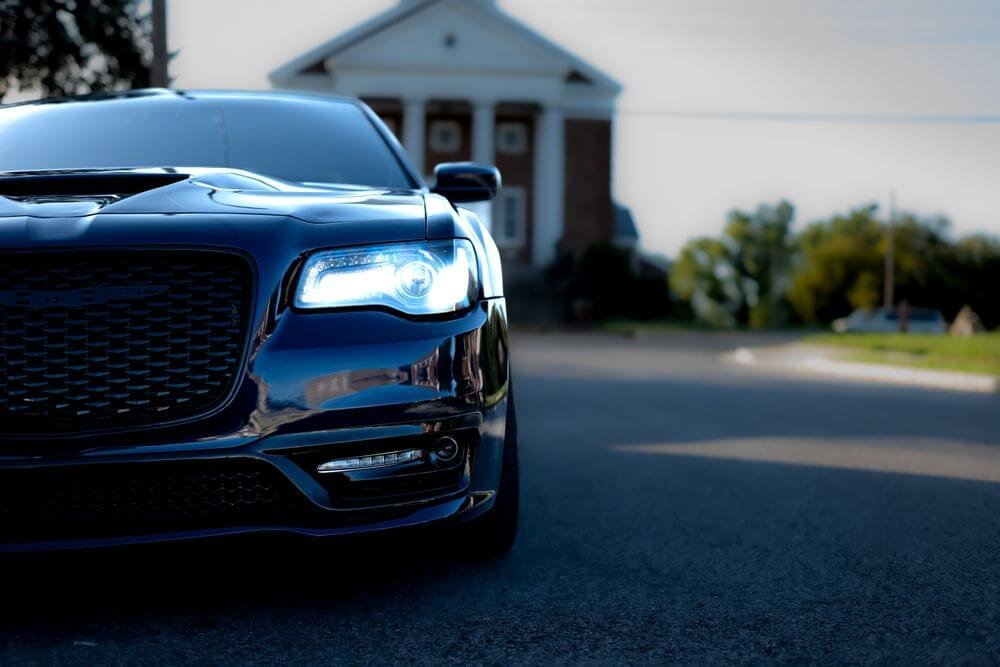
If you’ve been on YouTube recently, you may have seen videos with titles like “Chrysler, Dodge, Jeep & Ram Are OFFICIALLY Out of Business.” Those titles are alarming — and they’re also misleading.
The real situation is more complicated than either “everything is fine” or “the brand is dead.” This article breaks down what’s actually happening with Chrysler, what Stellantis’ financial problems mean in practice, and what current or prospective owners should realistically expect.
Chrysler Is Not Going Out of Business — But the Situation Is Complicated
Let’s answer the core question directly: Chrysler is still operating and selling vehicles as of 2025. No bankruptcy filing has been made. No brand shutdown has been announced.
Chrysler CEO Christine Feuell has said publicly that the brand is “still alive” and is not on the table for elimination. Stellantis — the parent company — has stated that none of its brands are for sale and that it is actively investing in Chrysler’s future.
The YouTube videos claiming Chrysler is “officially out of business” are not backed by any official filing, press release, or legal announcement. They mix real financial problems with conclusions the data doesn’t actually support.
There’s an important distinction to make here: facing serious challenges is not the same as going out of business. Chrysler has real problems. But problems and shutdowns are two different things.
Why So Many People Think Chrysler Is Already Dead
The concern isn’t coming from nowhere. There are real reasons people are worried, and it’s worth taking them seriously.
Over the past decade, Chrysler has discontinued nearly every model it once sold. The 300, the 200, the PT Cruiser, the Town & Country — all gone. What used to be a full-line automaker now sells essentially one vehicle in North America: the Pacifica minivan, along with a fleet-focused version called the Voyager.
On top of the shrinking lineup, Stellantis reported roughly a 48% drop in net profits in the first half of 2024. North American sales dropped around 16%. The stock price fell about 8.5%. There have also been plant closures, layoffs, and production cuts across multiple Stellantis brands.
Those numbers are real. But here’s the context those YouTube videos often skip: a bad quarter — or even a bad year — doesn’t mean a company shuts down next week. Ford has had terrible quarters. Toyota has had profit drops. Neither closed. The same logic applies here.
The alarming headlines are using real data to reach conclusions the data doesn’t actually justify.
Chrysler’s Current Reality — A One-Product Brand in a Tough Spot
That said, Chrysler’s position is genuinely narrow. By 2025, the brand sells only minivans in North America. Two variants of essentially the same vehicle.
That makes Chrysler vulnerable in a specific way: if minivan demand softens, or if a competitor like Toyota or Honda pulls further ahead in the segment, Chrysler has no other product line to fall back on. Its total U.S. sales volume is small compared to Ford, GM, or Toyota.
But being a small, one-product brand doesn’t automatically mean you’re finished. Think about Mini or Mitsubishi in North America. Both operate with limited lineups and modest sales. Neither is thriving the way it once did. But neither is out of business, either.
Chrysler could realistically end up in a similar place — a niche brand with a narrow focus, surviving on a small but loyal customer base. That’s not a great outcome for a brand that once competed across multiple segments, but it’s not extinction either.
What Chrysler Has Actually Planned for the Next Few Years
One thing the doom-and-gloom videos often ignore is that Chrysler does have a product roadmap. It’s not a company with nothing in the pipeline.
Here’s what’s been announced or confirmed:
- A new electric SUV/crossover built on Stellantis’ STLA Large platform is in development. It was originally targeted for 2025 but has been pushed to early 2026. Treat that as a target date, not a guarantee — Chrysler has already delayed it once.
- A new Chrysler EV every year after the first launch is part of the stated plan, eventually including a three-row SUV.
- An electric Pacifica minivan is planned, keeping the Pacifica name. Timing is described as “a few years out,” so don’t expect it soon.
- A refreshed Pacifica in both plug-in hybrid and gas versions is expected around 2026.
Chrysler has also shown concept vehicles — the Airflow in 2022 and the Halcyon in 2024 — to signal where the brand’s design is heading. Note that the Airflow is not going into production; it was a concept, not a commitment.
This is a real plan, backed by executive statements and Stellantis investment. It’s also a plan that has already slipped by at least a year. That’s worth watching closely.
What “Going Out of Business” Would Actually Look Like
It’s worth understanding what would actually happen if Chrysler were eventually phased out — because it’s probably not what most people picture.
Brand discontinuation is not the same as a company vanishing overnight. When GM killed Pontiac, Saturn, Oldsmobile, and Mercury, existing owners didn’t suddenly lose their warranties or their ability to get repairs. Parts and service continued through GM’s broader dealer and parts network. The same would apply to Chrysler if it were ever discontinued as a brand.
Corporate bankruptcy is a different scenario — but Chrysler has already been through that. In 2009, it filed for bankruptcy, restructured, allied with Fiat, and kept operating. The Chrysler brand survived. Bankruptcy doesn’t necessarily mean a brand disappears; it means the finances get reorganized.
Even in a worst-case scenario where the Chrysler name was eventually retired, Stellantis would still be legally and practically obligated to honor warranties and support parts for an extended period. That’s standard practice in the auto industry.
Should You Buy a Chrysler Right Now?
If you’re considering a Chrysler Pacifica — especially the plug-in hybrid version — here are the practical things to think about.
For Current Owners
Your warranty is backed by Stellantis, not just the Chrysler brand. There’s no current indication of any change to warranty coverage. The Pacifica’s plug-in hybrid system shares technology with Jeep’s 4xe lineup, which means parts and service knowledge are spread across a wider dealer network — that’s a real advantage for long-term support.
For Prospective Buyers
There is some resale value risk if the brand continues to shrink or is eventually discontinued. We saw that with Saturn and Pontiac — brand uncertainty hurt resale values before those brands were officially ended.
On the flip side, struggling brands often come with strong incentives and dealer discounts. If you’re buying for practical use and plan to keep the vehicle for several years, that lower purchase price can offset some of the resale risk.
The Pacifica is also a genuinely functional vehicle in a segment with limited competition. Its value to buyers tends to be based on what it does, not what badge is on the hood.
Chrysler’s History of Near-Death Experiences
Here’s something worth keeping in mind: Chrysler has been “almost dead” before. Multiple times.
In 1979, the company needed a government-backed bailout to survive. In 2009, it filed for bankruptcy and restructured through an alliance with Fiat, eventually forming FCA and later merging into Stellantis.
The corporate entity that owns Chrysler today — Stellantis North America, historically known as Chrysler — has survived government bailouts, full bankruptcies, and ownership changes. That doesn’t mean the current challenges are trivial. But it does explain why the brand keeps defying predictions of its death.
For more context on how businesses navigate industry disruption and restructuring, BusinessWise covers these topics regularly across multiple industries.
How to Read the News on This Topic
When you see a YouTube video claiming Chrysler or any Stellantis brand is “officially out of business,” ask yourself one question: Is this based on an official filing, announcement, or executive statement?
If the answer is no — if it’s based on quarterly profit drops, analyst opinions, or declining sales numbers — then you’re looking at analysis and speculation, not confirmed news. That analysis might be worth reading. But it’s not the same as fact.
Reputable auto outlets like MotorTrend, along with major business publications, give you a much clearer picture than sensational video titles designed to get clicks. Use official sources — SEC filings, press releases, CEO interviews — as your baseline, and treat everything else as commentary.
The Bottom Line
Chrysler is not going out of business right now. It is, however, operating from a narrow position with a challenging financial backdrop and a parent company under real pressure.
The brand sells one vehicle. Its first EV has already been delayed. Stellantis is cutting costs and dealing with steep profit declines. These are legitimate concerns, and anyone buying or owning a Chrysler vehicle should be aware of them.
Read Also: