
You drive past your local Long John Silver’s and notice the lights are off. The sign is gone. The parking lot is empty. It’s easy to assume the whole chain is finished.
But that assumption is wrong.
Long John Silver’s is still operating. What’s actually happening is more complicated — and more interesting — than a simple shutdown. This article breaks down the real story: why so many locations have closed, who owns the brand now, and what they’re doing to keep it alive.
The Short Answer: No, But the Chain Is Much Smaller Than It Used to Be
Long John Silver’s is not going out of business as of 2025–2026. It is, however, a fraction of its former size.
At its peak in the 1980s, the chain had over 1,500 U.S. locations. By late 2024, that number had dropped to roughly 485. That’s a dramatic decline — but a smaller chain is not the same as a dead one.
The company is actively investing in remodels, digital ordering, and a repositioned menu. Those are not the moves of a brand preparing to shut its doors. They’re the moves of a brand trying to stop the bleeding and find a path forward.
How Long John Silver’s Went From 1,500 Locations to Under 500
Long John Silver’s was founded in 1969 in Lexington, Kentucky, by restaurateur Jim Patterson. The concept was straightforward: fast, affordable fried seafood in a family-friendly setting. It worked.
Through the 1970s and into the 1980s, the chain expanded rapidly, surpassing 1,000 locations and eventually topping 1,500 across the U.S. The first international location opened in Singapore in 1983.
Then the cracks started showing.
Overexpansion created operational strain. When sales softened, the chain didn’t have the flexibility to absorb the pressure. Consumer tastes were also shifting — people wanted lighter, fresher options, and Long John Silver’s menu was still built around heavily battered, fried food.
In 1998, the company filed for Chapter 11 bankruptcy, listing assets of around $329 million against liabilities of about $457 million. That was a significant financial hole, and it set the tone for decades of gradual contraction.
Competition didn’t help. The brand was no longer just competing with other seafood chains. Chicken specialists, fast casual restaurants, and even burger chains were pulling customers away. By 2021, the U.S. location count had already fallen to around 670.
154 Store Closures in Three Years — What That Number Actually Means
Between 2022 and 2024, Long John Silver’s closed 154 U.S. locations. The breakdown: 49 in 2022, 71 in 2023, and 34 in 2024. That pace is what’s driving the “are they going under?” searches.
But here’s the important context: these were predominantly underperforming franchise units. The closures were not a mass shutdown or a sign of corporate collapse. They were a portfolio cleanup — removing weak locations to focus resources on stronger ones.
This kind of move is standard in the restaurant and retail industry. A chain closes unprofitable stores, stops subsidizing bad performance, and reinvests in locations that actually generate returns. It looks bad on paper, but it’s often a necessary step in a turnaround.
If your local Long John Silver’s closed, that unit likely wasn’t making money. It doesn’t mean the brand is done everywhere else.
New Ownership and the Current Turnaround Plan
In November 2022, Long John Silver’s was acquired by Four Oaks Partners, an investor group led by franchisee Bob Jenkins. That timing matters: a franchisee-led group buying into a struggling brand is a signal that they believe value still exists. You don’t buy a chain you think is worthless.
Since the acquisition, the company has been pursuing a multi-part strategy to stabilize and grow the business.
Restaurant Remodels and Digital Upgrades
The brand has been testing updated restaurant layouts with modernized interiors and exteriors. Self-service kiosks are being added to speed up ordering and reduce labor pressure — a practical response to ongoing labor cost challenges in the restaurant industry.
A new mobile app and loyalty program called Secret Society Rewards launched to drive repeat visits and collect customer data. These investments cost real money. A brand heading toward shutdown doesn’t spend on loyalty infrastructure.
International Expansion
While U.S. locations have been declining, the company has been opening new stores internationally. Since 2023, new locations have launched in Indonesia, Thailand, and Malaysia. Western-style fast food still has growth potential in markets where it’s less saturated, and Long John Silver’s is using that to offset domestic contraction.
The Chicken Pivot
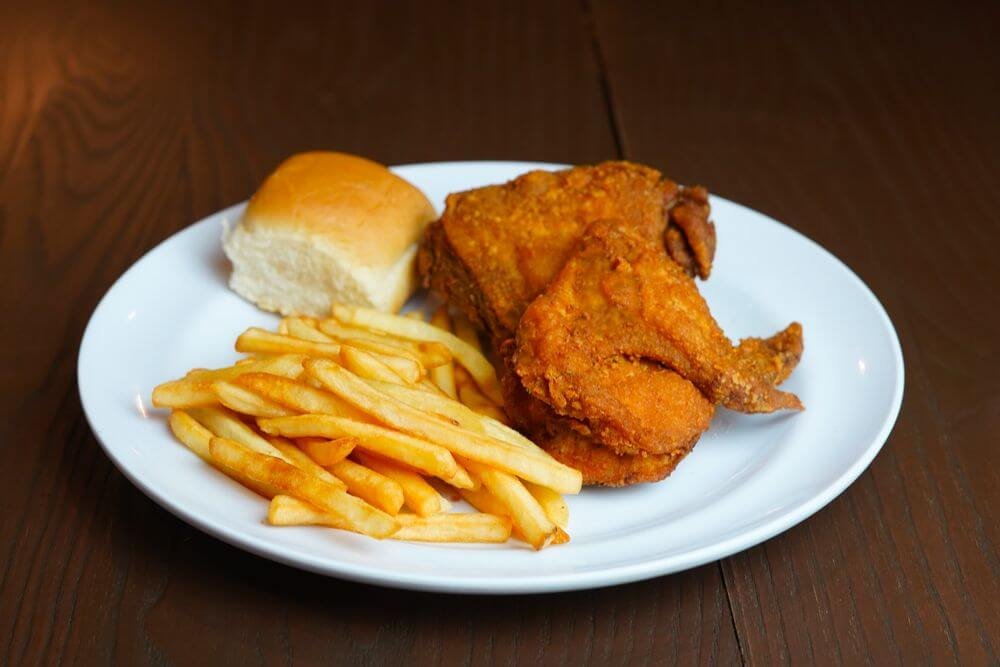
In October 2025, Long John Silver’s made its most visible strategic move: it rebranded as a “chicken and seafood” restaurant and rolled out a new logo placing chicken front and center.
This is a significant shift. For 56 years, the brand was synonymous with fried fish. Seafood is a narrower market — demand is more volatile, ingredient costs are less predictable, and consumer perception around freshness creates friction that burger and chicken chains don’t face.
Chicken is mainstream. It’s familiar, consistent, and in high demand across almost every demographic. Think of this pivot like a pizza chain heavily promoting wings and sandwiches — you’re not abandoning your core, you’re opening the door to customers who weren’t coming in before.
Whether the pivot works depends on execution, but the logic is sound.
The Real Risks Still Facing the Brand
A balanced view of Long John Silver’s has to acknowledge what could still go wrong. This is not a brand that has successfully turned the corner — it’s a brand in the middle of trying to.
Continued store closures could become a self-fulfilling problem. Fewer locations mean less convenience for customers. Less convenience means fewer visits. Fewer visits make remaining locations harder to sustain. At some point, the footprint can shrink so much that brand visibility collapses.
The seafood niche is inherently difficult. Fish prices are volatile. Supply chains for seafood are more complex than for beef or chicken. Consumer hesitation about freshness in a fast-food environment is a real barrier that the brand has always had to fight.
Rebranding doesn’t automatically fix operations. A new logo and a chicken menu don’t solve problems in franchise management, food quality consistency, or real estate challenges. The modernization plan needs to actually show up in customer experience to matter.
There’s no public financial data to confirm the turnaround is working. Long John Silver’s is privately held, so there are no quarterly earnings to review. Trade coverage and operational announcements suggest momentum, but independent verification of actual financial improvement is limited.
What would a true “going out of business” scenario look like? It would involve another bankruptcy filing, mass franchisee exits, or a formal liquidation announcement. None of those are currently reported.
Is It Still Worth Considering as a Franchise?
If you’re evaluating a Long John Silver’s franchise, the honest answer is: it depends on the market and the unit economics.
The brand has real challenges — a shrinking domestic footprint, a niche that’s harder than average to operate, and a rebranding that hasn’t been proven out yet. At the same time, the new ownership has a clear strategy, and there are markets where seafood-forward fast food still has loyal customers with few alternatives.
For anyone researching this kind of decision, sites like BusinessWise cover franchise and business investment topics in practical terms — worth a look before making any commitments.
The key question to ask isn’t “Is Long John Silver’s still open?” — it’s “Is this specific location, in this specific market, viable for the next five to ten years?” Those are different questions with different answers depending on where you are.
The Bottom Line
Long John Silver’s is not going out of business. It is, however, a dramatically smaller chain than it was at its peak, actively working through a high-risk transformation that involves closing weak stores, modernizing operations, and repositioning the brand around chicken and seafood rather than seafood alone.
The 154 closures over three years are real. The decline from 1,500 to 485 locations is real. But so is the new ownership, the international expansion, and the investment in technology and rebranding.
Whether the turnaround succeeds is genuinely uncertain. But confusing a shrinking chain with a dying one is a mistake. Long John Silver’s is still in the water — just fishing in a much smaller pond than it used to.
Read Also: