
If you’ve driven past a Lowe’s with “Store Closing” banners out front, or seen a headline screaming about thousands of stores shutting down, it’s easy to panic. People start wondering whether their local store will disappear, whether their gift cards are still good, or whether the whole chain is collapsing.
Here’s the short answer: Lowe’s is not going out of business. But there’s more to the story, and it’s worth understanding exactly what is happening — and what isn’t.
Lowe’s Is Not Going Out of Business — Here Is the Full Picture
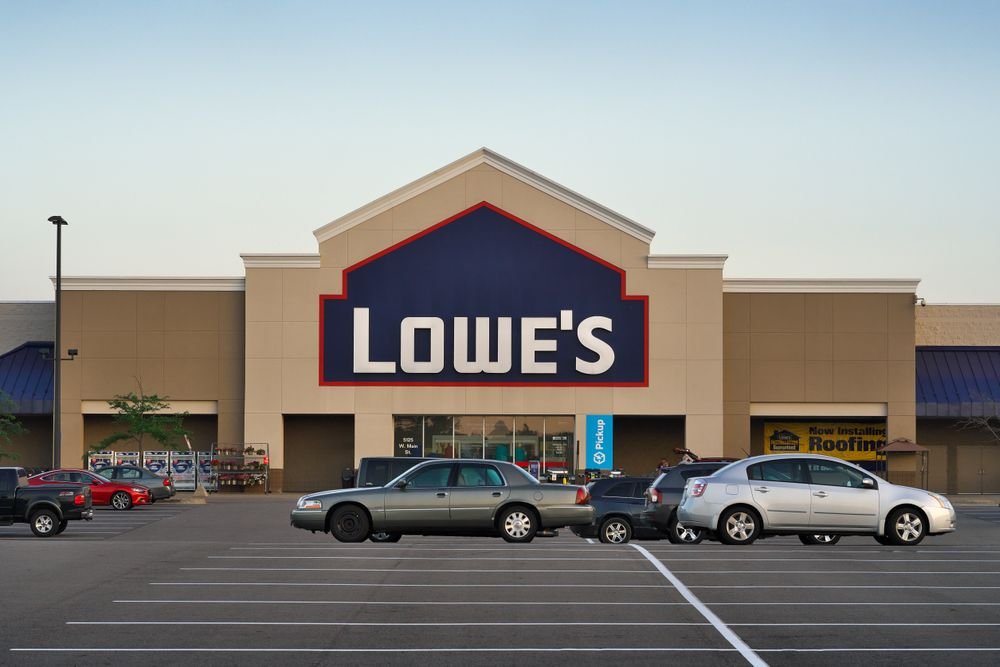
Lowe’s is one of the largest home improvement retailers in North America. As of late 2022, it operated 2,181 stores across North America. It’s a Fortune 500 company headquartered in Mooresville, North Carolina, and it continues to run normal operations with no credible signs of bankruptcy or a company-wide wind-down.
The “going out of business” narrative mostly comes from two places: misread headlines about selective store closures, and temporary holiday shutdowns being mistaken for permanent ones. Neither is what it sounds like.
If you search for news about Lowe’s closing stores, you’ll find results. But finding a list of closures doesn’t mean the company is failing. It means you need to read more carefully — which is what this article will help you do.
The Difference Between Closing a Few Stores and Closing a Business
This is the most important distinction to understand. Closing specific locations is not the same as a company shutting down.
In November 2018, Lowe‘s announced it would close 20 U.S. stores and 31 Canadian stores as part of what the company called a “strategic reassessment” of its store portfolio. That sounds significant — until you look at the numbers in context.
At the time, Lowe’s was operating somewhere between 1,700 and 2,100+ locations. Closing 51 stores out of that base is roughly 2–3% of the total. That’s not a chain in collapse. That’s a company trimming the least productive parts of its operation.
The 2018 press release also confirmed that most of the U.S. stores being closed were within 10 miles of another Lowe’s location. These weren’t stores leaving underserved communities with no replacement. They were redundant or underperforming sites sitting too close to better-performing ones.
Compare that to what an actual retail collapse looks like. Sears filed for bankruptcy, closed hundreds of locations with no nearby replacements, and held nationwide liquidation sales. There was no “strategic reassessment” — there was a company that ran out of options. Lowe’s 2018 move looked nothing like that.
Why Lowe’s Closes Specific Locations
Large retailers with hundreds or thousands of locations can’t realistically expect every single store to perform equally. Some locations will consistently underperform, and at some point, it makes more business sense to close them and redirect investment elsewhere.
Lowe’s stated clearly in 2018 that its goal was to focus on the most profitable stores and improve the overall health of its portfolio. The specific reasons a location might end up on a closure list include:
- Overlapping trade areas — two stores serving the same customer base
- Persistently low sales or negative cash flow
- Unfavorable lease terms that make the location unprofitable to maintain
- Shifts in local demographics or increased local competition
Think of it like a landlord who owns 20 rental properties. If two of them consistently lose money — bad location, high maintenance costs, low rent — selling those two isn’t a sign they’re going broke. It’s a sign they’re making the overall portfolio stronger.
Lowe’s has also been investing in online ordering, curbside pickup, and delivery. Some of that digital investment replaces the need for certain physical locations. It’s a shift in how customers shop, not a retreat from the business.
One more note on the 2018 Canadian closures: many of those 31 locations were under the RONA brand and other banners owned by Lowe’s in Canada — not all stores branded as “Lowe’s.” If you’ve seen lists that include Canadian locations and assumed it meant the Lowe’s brand was exiting Canada entirely, that’s a misread of what the data actually shows.
What Holiday Closures Actually Mean
The second major source of confusion is holiday closures. These are one-day shutdowns of all stores on specific holidays — and they get misread as permanent closures almost every time they’re announced.
Lowe’s has a documented policy of closing all stores on certain holidays so employees can spend time with family. For example, Lowe’s has closed all stores on Easter Sunday for multiple consecutive years — local news coverage noted it was the sixth year in a row the company had done this, making it a recurring policy, not a crisis response.
More recently, there have been reports that Lowe’s plans to close all roughly 1,700 stores for 24 hours on Christmas Day 2025 — again, to give employees time off during the holiday.
When someone sees a headline like “Lowe’s closing all 1,700 stores” without reading the detail about it being a single day, panic spreads fast. That’s understandable, but it’s not an accurate read of the situation. A company closing every location for one day as a holiday benefit is actually a positive signal — it means the business is healthy enough to absorb lost sales for a day in exchange for employee goodwill.
What Happens If Your Local Store Is on a Closure List
If your specific Lowe’s location is permanently closing, here’s what you can typically expect:
Closing sales: Most closing Lowe’s locations run store closing sales to clear inventory before shutting down. In 2018, a handful of U.S. locations closed immediately without sales, but that was the exception.
Nearby store access: As mentioned, most U.S. closures in 2018 were near another Lowe’s location. Your next closest store will handle returns, warranties, and ongoing service needs.
Gift cards and credit accounts: These remain valid chain-wide. A store closing doesn’t affect your gift card balance or Lowe’s credit account — you can use them at any open location or online.
Employees: Lowe’s stated in its 2018 announcement that most affected employees would be offered the opportunity to transition to a nearby Lowe’s in a similar role. That doesn’t mean everyone gets placed — but the company’s stated policy was to prioritize transitions where possible.
How to Find Out If Your Local Store Is Actually Closing
Don’t rely on social media posts or YouTube videos for this. Here’s what actually works:
- Check Lowe’s corporate newsroom directly. When Lowe’s has announced closures in the past, they’ve published official press releases with specific store lists. The 2018 announcement included a public list of every closing location by state and Canadian province.
- Look at local news coverage. Local outlets typically cover store closures in their area quickly and accurately.
- Call or visit the store. Staff will know what’s happening at their location.
If there’s no announcement on the corporate site and your local news hasn’t covered it, the store is most likely not closing. A rumor on Facebook is not a reliable source.
Why These Rumors Keep Spreading
It’s worth understanding why “Lowe’s is going out of business” keeps circulating even though it isn’t true. A few things drive it:
First, headline framing. A headline like “Lowe’s Closing Stores” is technically accurate if 51 locations are closing — but it creates a very different impression than “Lowe’s closes 51 of its 2,000+ locations as part of portfolio review.” Both describe the same situation. Only one gives you the actual picture.
Second, holiday closure confusion. As described above, a one-day shutdown of all stores gets read as a permanent closure when people skim headlines rather than read the full story.
Third, Canadian banner confusion. Seeing closures of RONA locations and other Lowe’s-owned Canadian brands makes it look like a bigger retreat than it actually was.
For anyone trying to make sense of business news — whether it’s about Lowe’s or any other company — the practical habit is always the same: look at the actual numbers, find the primary source, and compare the scale of what’s happening to the size of the overall operation. For more practical business analysis like this, BusinessWise covers the stories behind the headlines without the noise.
The Bottom Line
Lowe’s is not going out of business. It operates over 2,100 stores across North America, continues to function as a going concern, and has no credible bankruptcy or wind-down process underway.
The closures people hear about fall into two categories: a targeted 2018 reduction of about 51 underperforming locations (a small fraction of total stores), and recurring one-day holiday shutdowns that are a company policy, not a distress signal.
If your local store is closing, that’s worth knowing — and the steps above will help you verify it and plan accordingly. But it doesn’t mean the chain is failing. It means one location didn’t make the cut in a portfolio of over two thousand. That’s just how large retail operations
Read Also: